Eating Behavior & Eating Disorders: Information, Action Tips & Help
When worry about eating is more than a phase -- and why speaking up early makes the biggest difference.
More Than a Phase
Eating disorders like anorexia or bulimia show up not just in eating behavior itself, but often in a distorted relationship with one's own body, tight control over food, or episodes of binge eating with loss of control. They're among the mental illnesses with the highest health risks, but they respond well to treatment when caught early -- the outlook worsens noticeably the longer they go untreated.
Why Diets Are Often Part of the Problem
Restrictive dieting and strict calorie-counting can reinforce an already troubled relationship with food instead of resolving it -- research shows strict restriction tends to increase the risk of binge eating rather than reduce it. A more helpful approach is usually returning to regular, adequate eating instead of more control.
Key point
Strict dieting and calorie-counting can reinforce disordered eating rather than resolve it -- regular eating instead of more control usually helps more.
Was this useful?
Empiralis stays free and ad-supported. If you'd like to support it directly instead, every bit helps keep it independent.
Related tests
Action tips
- Eat regularly rather than restrictively -- skipped meals often set up later binges.
- Don't use calorie-counting or constant weighing as a form of "self-therapy" -- it often reinforces the fixation.
- Talk to someone you trust, even when shame gets in the way -- most people who've been through it report afterward that this step was the hardest but most important one.
- Critically examine your social media consumption: deliberately cut back on content that glorifies body image or dieting.
- Seek professional help early -- the earlier treatment starts, the better the outlook.
Checklist: First Steps If You're Worried About Your Eating
- Took the SCOFF questionnaire and noted the result
- Talked to someone you trust about it
- Made an appointment with a primary care doctor
- Looked into a specialized eating disorder counseling service
- Deliberately tried regular meals (instead of skipping) for one day
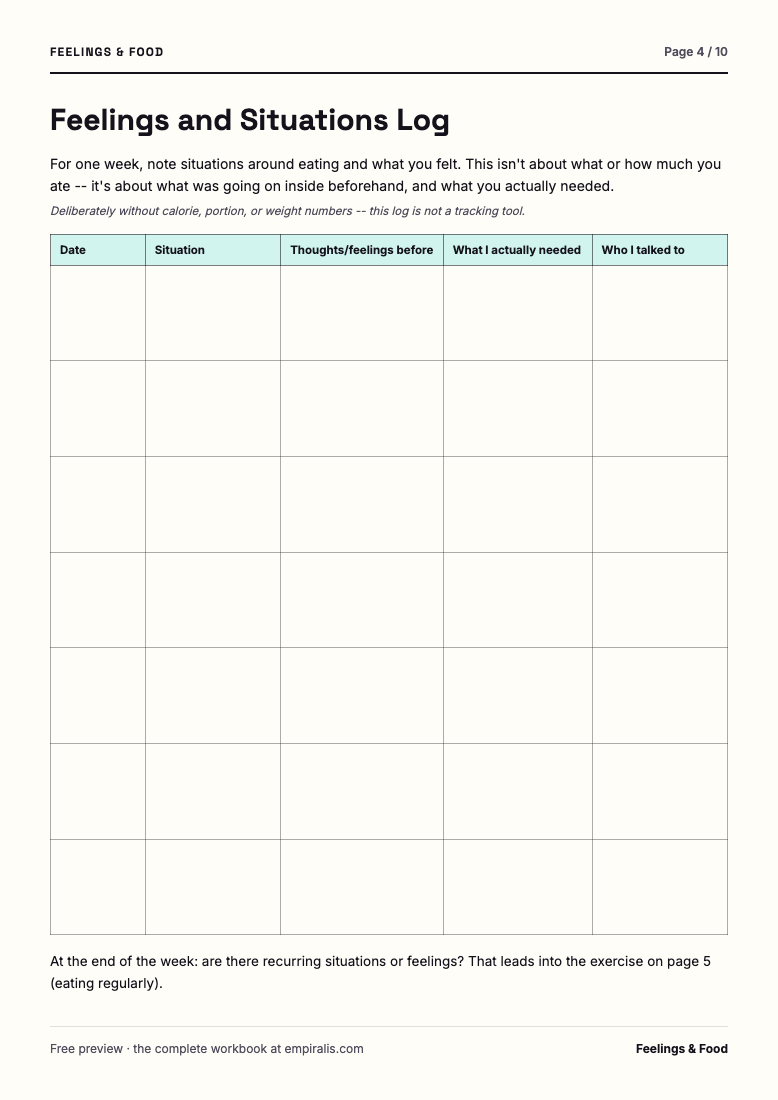
Feelings and Situations Log
Deliberately kept free of calorie or portion numbers: instead, note the situation and the feeling behind it -- more helpful than raw food tracking, and a good starting point for a conversation with a professional.
| Date | Situation | Thoughts/feelings before | What I actually needed | Who I talked to |
|---|---|---|---|---|
What now?
The concrete next step: the real path to a diagnosis, contact points online and in person, and which of our worksheets fit where.
Help resources
National Alliance for Eating Disorders helpline
Confidential support for eating disorders.
1-866-662-1235
988 Suicide & Crisis Lifeline
Free, confidential, available 24/7. Call or text.
988
Specialized eating disorder counseling service
Ask your primary care doctor or insurance provider for local options.
locally