Alcohol & Substance Use: Information, Action Tips & Help
Between low-risk drinking, hazardous use, and dependence -- where are the lines, and what helps to course-correct early?
A Spectrum, Not a Fixed Line
Alcohol and substance use falls along a spectrum: from low-risk use, through hazardous and harmful use, to dependence. The transition is gradual and can't be pinned down by quantity alone -- what also matters is loss of control, tolerance, withdrawal symptoms, and whether the use is already affecting relationships, health, or daily life.
Why Acting Early Is Easier Than Acting Late
The longer hazardous use continues unchanged, the more it becomes entrenched as a coping strategy for stress, anxiety, or social situations -- and the harder change becomes. Research on brief interventions shows that even a single structured conversation about your own drinking (the kind the AUDIT makes possible) can measurably change drinking behavior, especially at an early, not-yet-dependent stage.
Key point
Even a single structured conversation about your own drinking can measurably change drinking behavior -- especially early, before dependence sets in.
Was this useful?
Empiralis stays free and ad-supported. If you'd like to support it directly instead, every bit helps keep it independent.
Related tests
Action tips
- Document your use first, before trying to change it -- this creates an honest picture without immediate pressure to act.
- Deliberately plan drink-free days during the week, instead of treating full abstinence as the only option.
- Identify your triggers: what time of day, with whom, and in what mood are you most likely to use?
- Think through alternatives for social situations where use has so far been automatic.
- Don't go it alone -- talk to someone you trust or a counseling service, even if it feels uncomfortable.
- A setback isn't a failure -- it's normal in many change processes. What matters is continuing afterward instead of giving up.
Checklist: First Steps If You're Worried About Your Own Use
- Took the AUDIT and noted the result
- Honestly tracked your own use for one week
- Talked to someone you trust about it
- Looked into a nearby addiction counseling service (usually free, often available anonymously)
- Made an appointment with a primary care doctor
- Noted the triggers from the past week
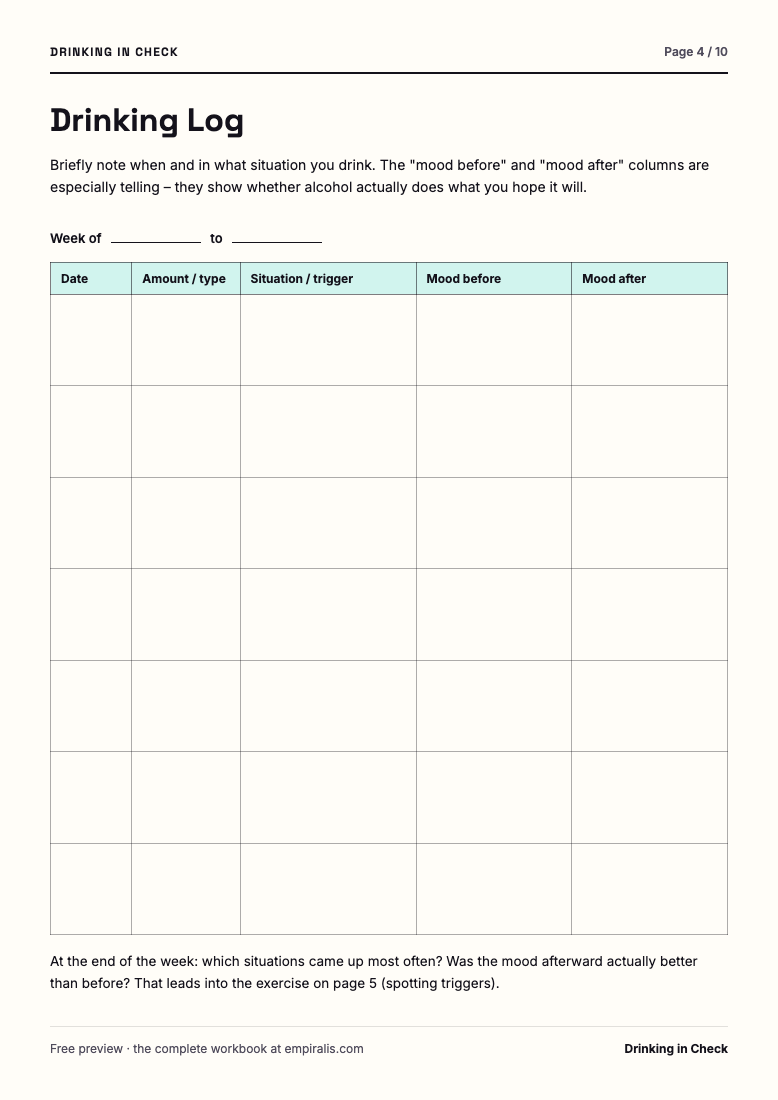
Drinking Log
Briefly note when and in what situation use happens -- this makes patterns visible that are helpful to discuss with a counseling service.
| Date | Amount/type | Situation/trigger | Mood before | Mood after |
|---|---|---|---|---|
What now?
The concrete next step: the real path to a diagnosis, contact points online and in person, and which of our worksheets fit where.
Help resources
SAMHSA's National Helpline
Free, confidential, available 24/7. Treatment referrals for alcohol and other substances.
1-800-662-4357
Local addiction counseling service
Usually free, often available anonymously.
locally
Primary care doctor
A good first stop for evaluation and referral to specialized care.
locally