Loneliness & Connection -- a multi-step screening path
The UCLA Loneliness Scale is a good first signal, but it measures only one of several things that matter for a picture of your connectedness: how lonely you feel overall. It can't tell whether that comes from one particular relationship, from a lack of support in your wider circle, or from an attachment pattern that shows up across several relationships.
This path therefore walks you through four separate tests instead of one: the UCLA Loneliness Scale, a short reflection on your current situation, then relationship satisfaction (CSI-4), attachment style (ECR-R), and perceived social support (MSPSS) -- each with its own complete results. If you're not currently in a relationship, the path automatically skips the CSI-4, since it assumes an existing relationship. At the end you get no artificial combined score, but a picture that shows all four results side by side -- as additional information about your loneliness, not an explanation or cause of it.
Why a path, why these tests?
A single UCLA score can't tell whether loneliness is rooted more in a particular relationship, in a lack of social support overall, or in a recurring attachment pattern. So this path combines four independently validated but substantively different instruments: the UCLA Loneliness Scale as a starting point, relationship satisfaction (CSI-4), attachment style (ECR-R), and perceived social support (MSPSS). Importantly: these four scores describe different aspects of your situation side by side -- they don't causally explain why you feel lonely. An elevated attachment-anxiety score, for instance, is an additional finding, not proof that this particular pattern is causing your loneliness.
Ready to start?
4 tests · 1 reflection question
Worksheets for this topic
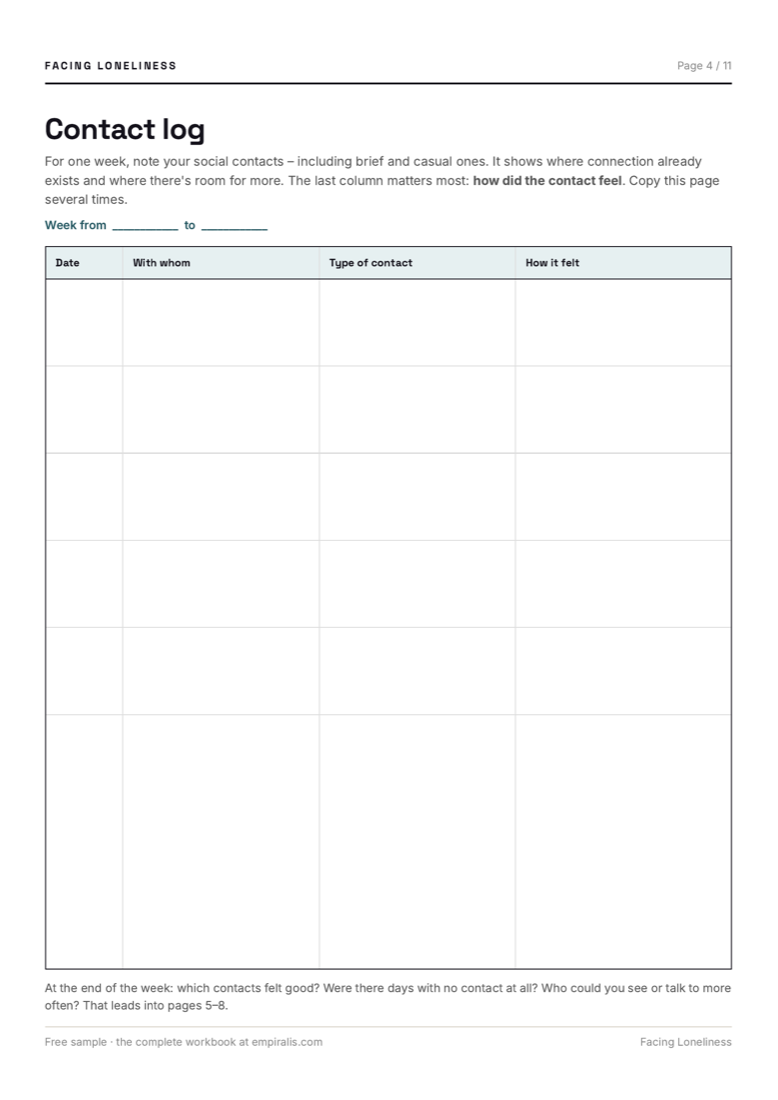
Facing Loneliness
Facing Loneliness
A workbook: loneliness is a feeling of missing connection, independent of contact numbers – and it can change. Rebuild connection in small, regular steps.
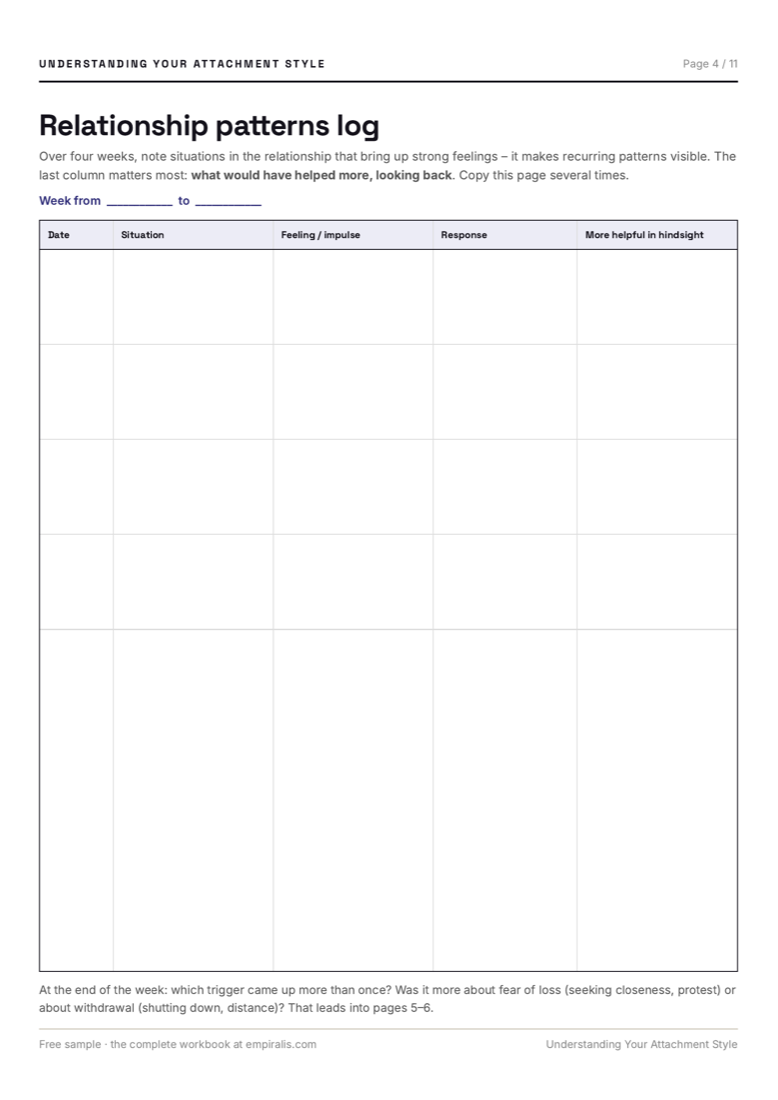
Understanding Your Attachment Style
Understanding Your Attachment Style
A workbook on attachment anxiety and attachment avoidance: spot your own patterns, say needs as a request rather than a reproach, repair after conflict – a companion to the ECR-R.
Was this useful?
Empiralis stays free and ad-supported. If you'd like to support it directly instead, every bit helps keep it independent.