Facing Loneliness
A workbook: loneliness is a feeling of missing connection, independent of contact numbers – and it can change. Rebuild connection in small, regular steps.
€4.00 · 11 pages, A4, PDF
Buy on Ko-fi →Checkout and instant download via Ko-fi.
The UCLA Loneliness Scale measures the subjective feeling of loneliness, not the number of your contacts – you can feel lonely in company and connected with just a few close contacts. That's exactly why loneliness can change, regardless of contact numbers, and it's one of the areas where active, repeated effort demonstrably makes a difference. This workbook turns that into four weeks of concrete, repeatable steps.
What's inside
- How to use the workbook – loneliness as a changeable feeling, not a contact count
- Baseline: UCLA score and connection by area of life
- Contact log: one week of recording who you were in touch with and how it felt
- Your contact map: inner circle, regular, loose, faded
- Reactivate loose contacts: names, hooks and low-pressure messages
- Regularity over intensity: a fixed weekly contact slot and a week planner
- Where contact happens along the way: research clubs, courses, volunteering
- Thoughts that reinforce withdrawal – test them and put them in perspective
- Looking back after four weeks and when support makes sense
- Notes and source
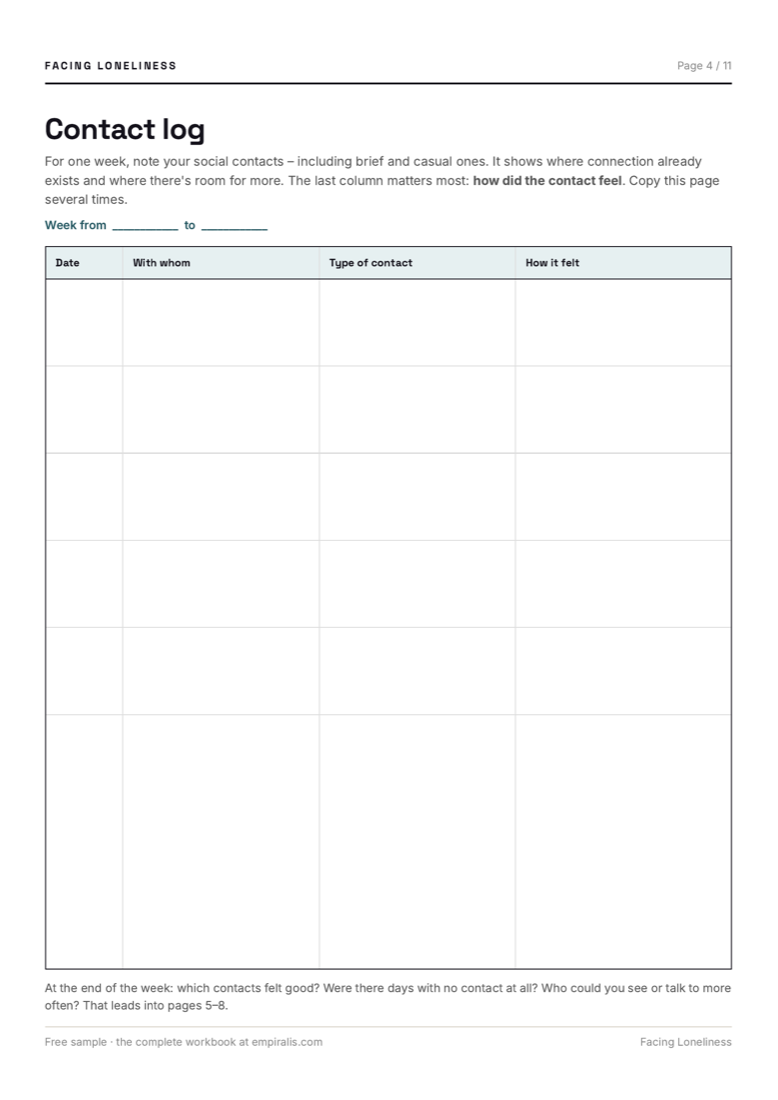
Free preview: Contact log (page 4)
Enter your email — we'll send a confirmation link. After confirming you go straight to the download. You'll also be subscribed to the Empiralis newsletter (unsubscribe any time).
Scientific basis
- Russell, D. W. (1996). UCLA Loneliness Scale (Version 3): Reliability, validity, and factor structure. Journal of Personality Assessment, 66(1), 20–40. — No separate permission is required for the UCLA Loneliness Scale; citation of the original source is expected. The bands used in the test are derived from the reference values of the original study and are not official clinical cutoffs.
Related on Empiralis