Burnout & Exhaustion -- a multi-step screening path
The Copenhagen Burnout Inventory (CBI) is a good first signal because it already separates exhaustion into three facets: personal, work-related, and related to dealing with clients, patients, or students. What the CBI alone can't do: tell whether a depressive episode, an anxiety disorder, or -- as a coping attempt -- risky alcohol use is behind the exhaustion. All three overlap heavily with exhaustion symptoms and are easy to miss as a result.
This path therefore walks you through several steps instead of a single test: the CBI itself, the WHO-5 well-being index as an independent second measure of your psychological state over the last two weeks, a short reflection on your current work situation, and pointers to likely alternative explanations. At the end you get no artificial combined score, but a picture that shows every signal side by side.
Why a path, why these tests?
A single CBI score can't tell a depressive episode, an anxiety disorder, or risky alcohol use apart from plain exhaustion -- the symptoms overlap heavily, and alcohol is not uncommonly used as a (short-term, counterproductive) coping strategy against exhaustion. So this path combines three pieces: the CBI with its three exhaustion facets, the WHO-5 as an independent, general well-being measure that doesn't specifically target exhaustion, and a reflection on your work situation that helps figure out which CBI facet is even meaningful for you. Only all of these together -- including the pointers to likely alternative explanations -- produce a picture a single test result can't.
Ready to start?
2 tests · 1 reflection question
Worksheets for this topic
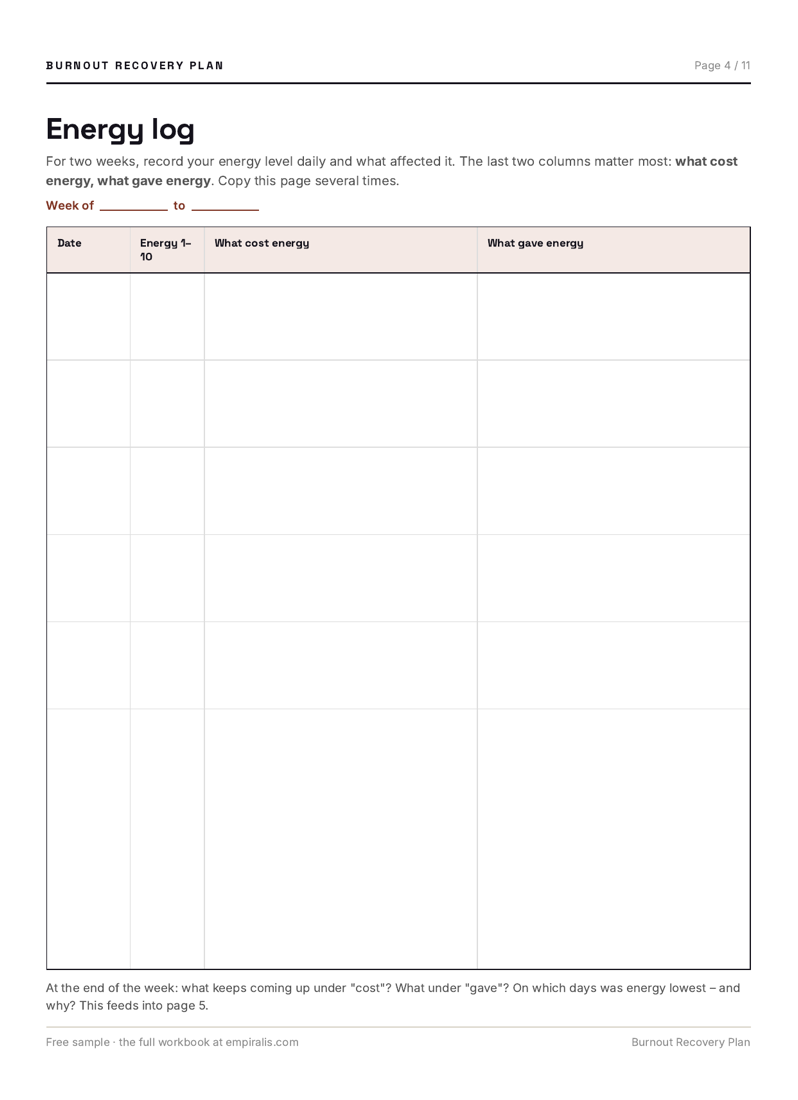
Burnout Recovery Plan
Burnout Recovery Plan
A workbook: burnout is more than a hard day, but not a fixed trait – recognise exhaustion, set boundaries and schedule recovery over four weeks.
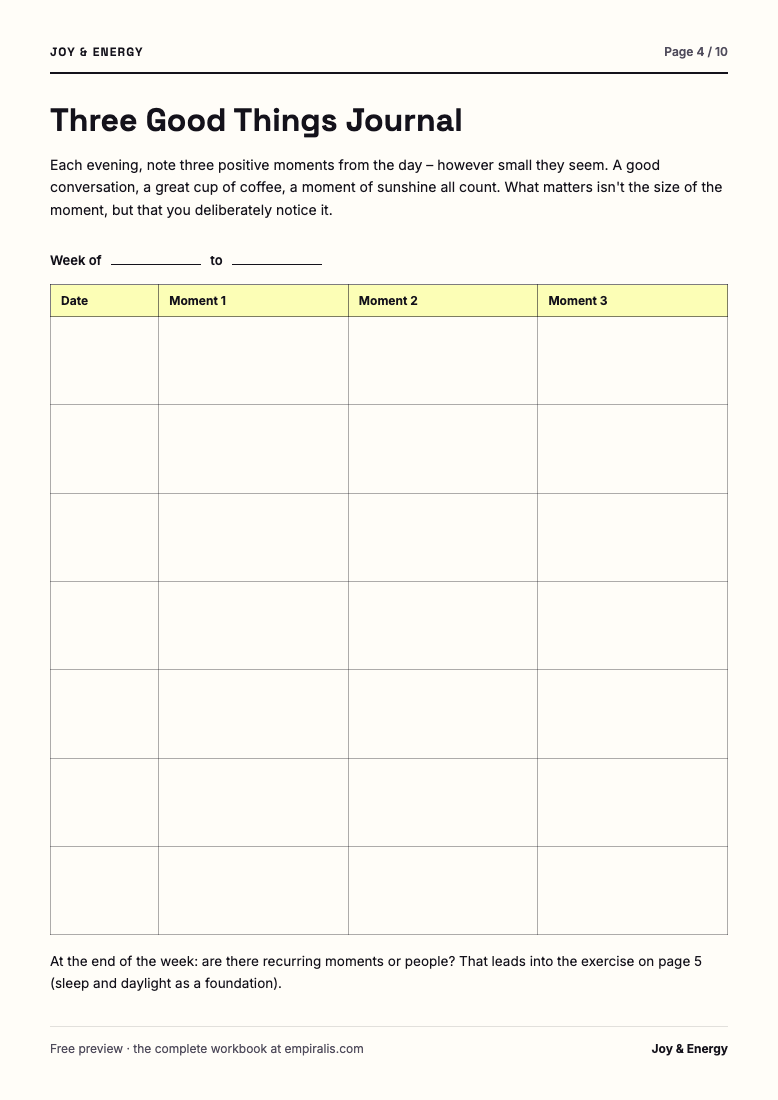
Joy & Energy
Joy & Energy
A workbook for the WHO-5: notice small good moments, anchor a simple routine for sleep and movement, and deliberately schedule meaningful activities and social contact -- over four weeks.
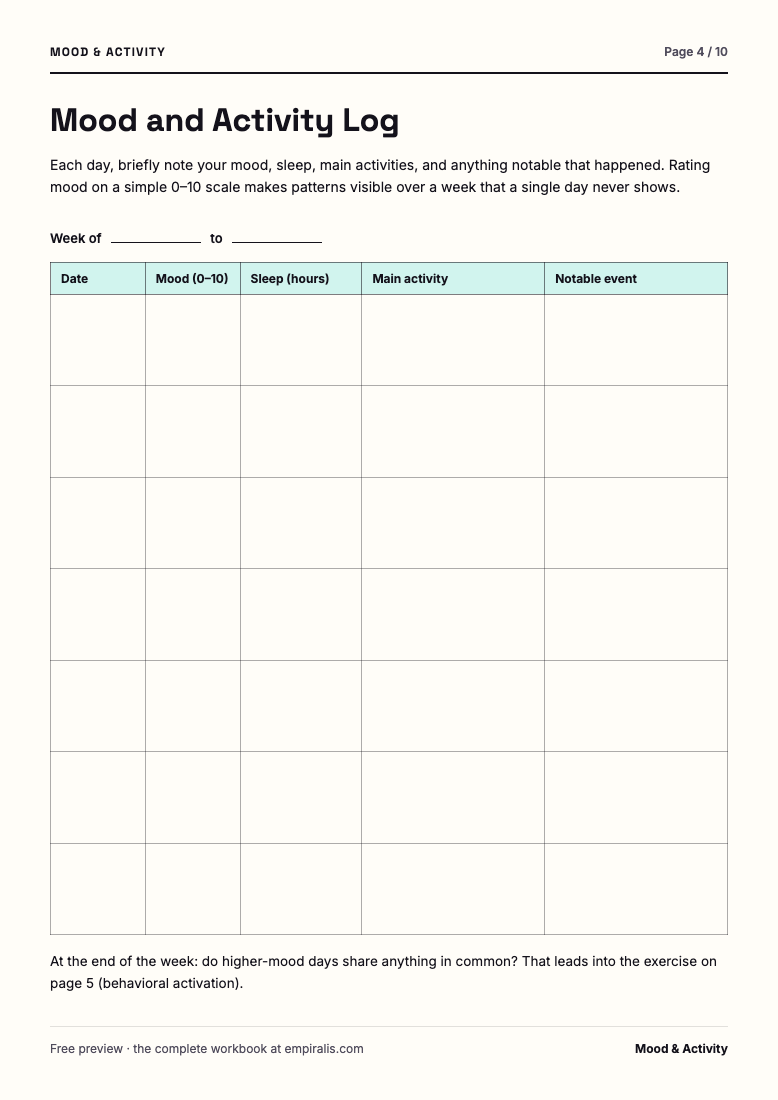
Mood & Activity
Mood & Activity
A workbook for the PHQ-9: track mood and activity for a month, with behavioral activation, a fixed daily structure, and small steps against social withdrawal -- over four weeks.
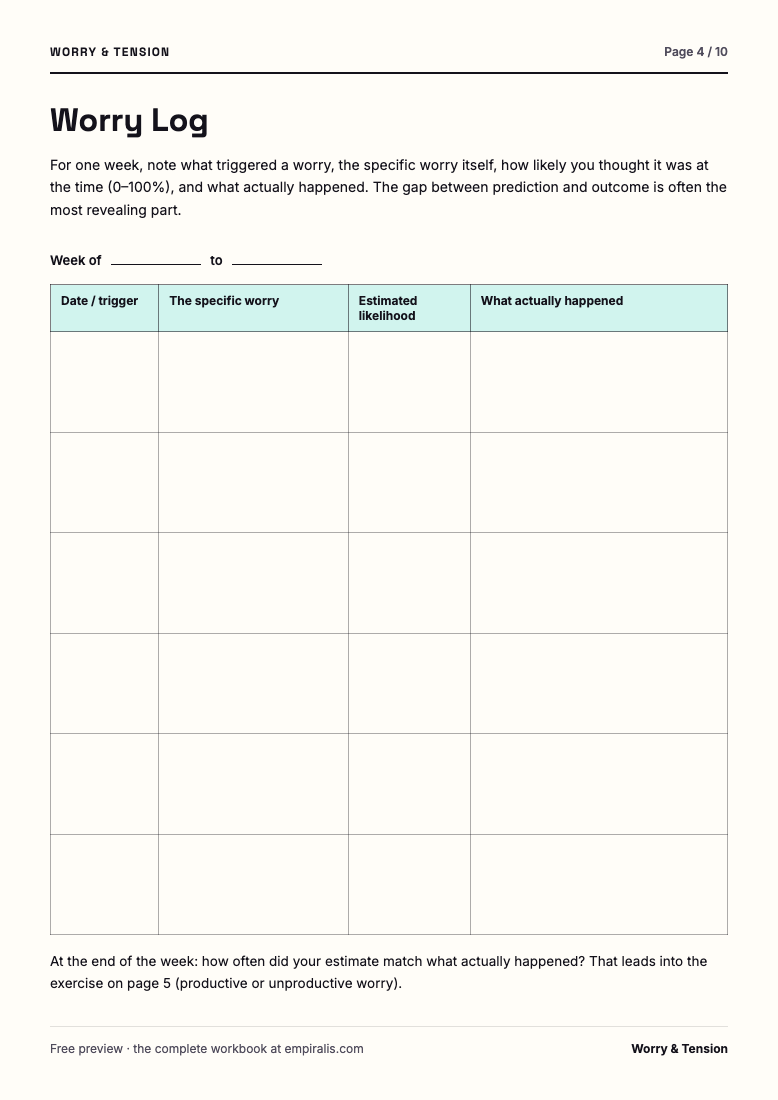
Worry & Tension
Worry & Tension
A calm workbook for the GAD-7: make your worries visible, tell productive worry from unproductive worry, set a fixed worry time, calm the body, and reduce avoidance -- over four weeks.
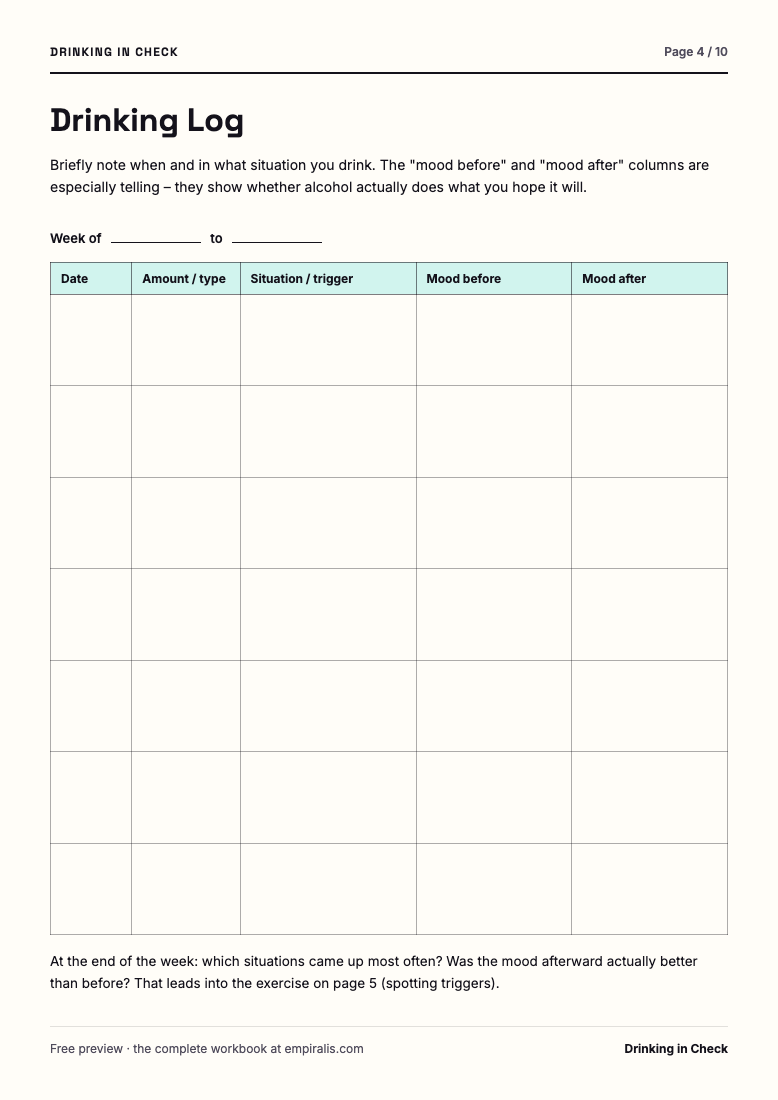
Drinking in Check
Drinking in Check
A workbook for the AUDIT: log your drinking honestly for a week, spot your triggers, plan drink-free days on purpose, and find alternatives for social situations -- over four weeks.
Was this useful?
Empiralis stays free and ad-supported. If you'd like to support it directly instead, every bit helps keep it independent.