Adult ADHD -- a multi-step screening path
The ASRS-v1.1 is a good first signal, but it only measures one of several things that matter for an ADHD picture: your current symptom level over the last six months. It can't tell whether those symptoms have followed you your whole life or just showed up recently through sleep loss, a depressive episode, anxiety, or stress -- and it says nothing about how much they actually limit your day-to-day life. That real-world impairment is itself part of the official diagnostic criteria, not just how often symptoms occur.
This path walks you through several steps instead of a single test: the ASRS-v1.1 itself, the WFIRS-S for actual everyday impairment, a short reflection on your childhood, and pointers to the most likely alternative explanations. The WFIRS-S runs to 69 questions -- noticeably longer than the ASRS -- so budget a few extra minutes. At the end, you get no single combined score, but a picture that shows every signal side by side.
Why a path, why these steps?
A single ASRS score can't tell sleep loss, stress, or a depressive episode apart from ADHD -- the symptoms overlap heavily. So this path combines four pieces: the ASRS-v1.1 as a validated screener for current symptoms, the WFIRS-S, which measures how much that actually affects family, work, daily life, and self-concept, a reflection on the core diagnostic criterion of "difficulties before age 12," and pointers to the most common alternative explanations. Only all four together produce a picture a single test result can't.
Ready to start?
2 tests · 1 reflection question
Worksheets for this topic
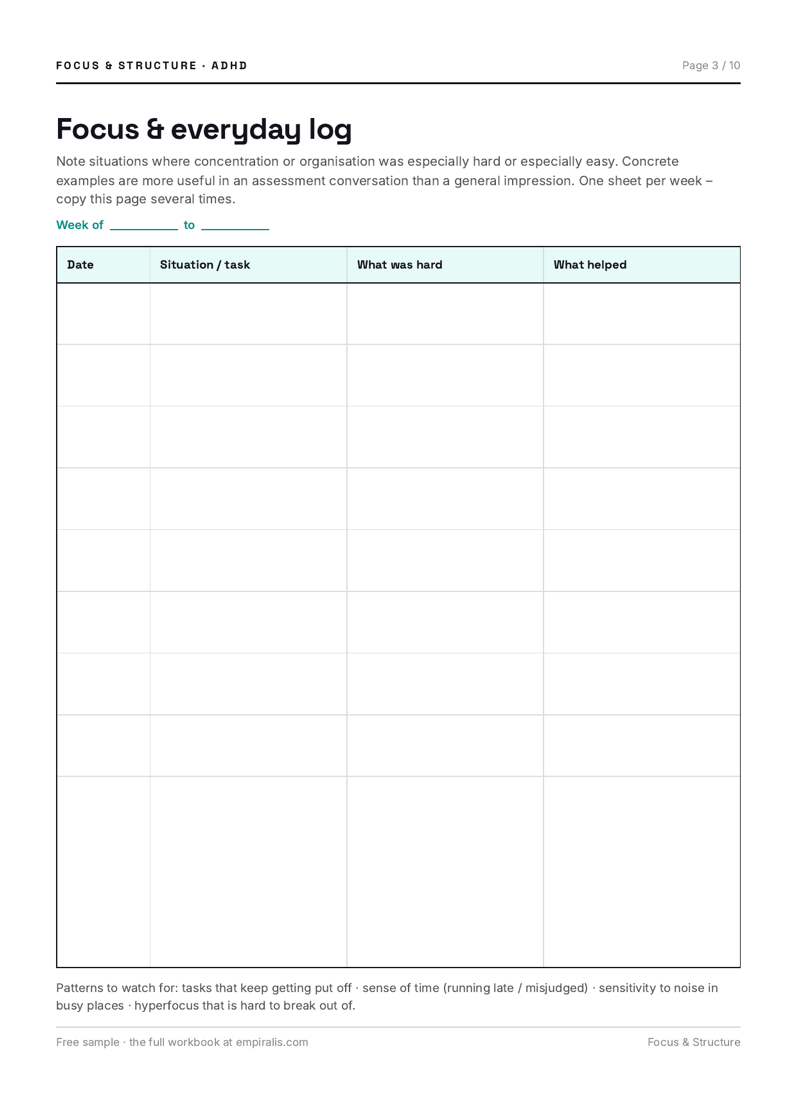
Focus & Structure
Focus & Structure
An ADHD workbook for adults: external structure instead of inner effort – built up over four weeks.
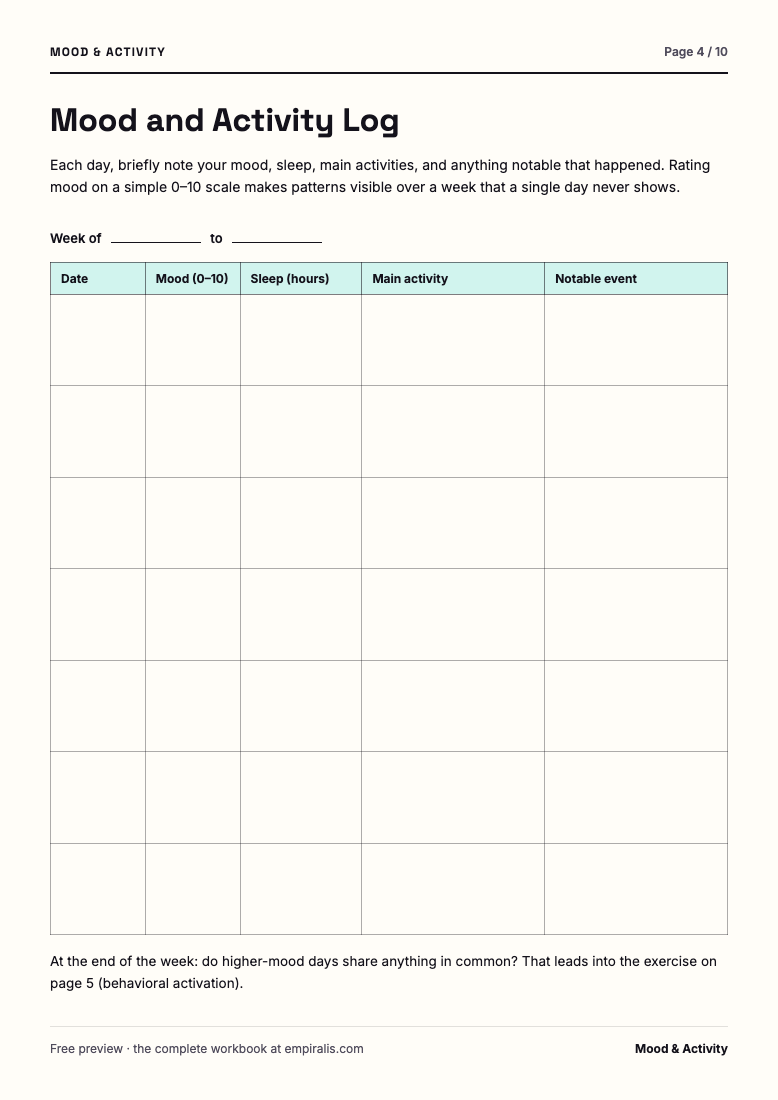
Mood & Activity
Mood & Activity
A workbook for the PHQ-9: track mood and activity for a month, with behavioral activation, a fixed daily structure, and small steps against social withdrawal -- over four weeks.
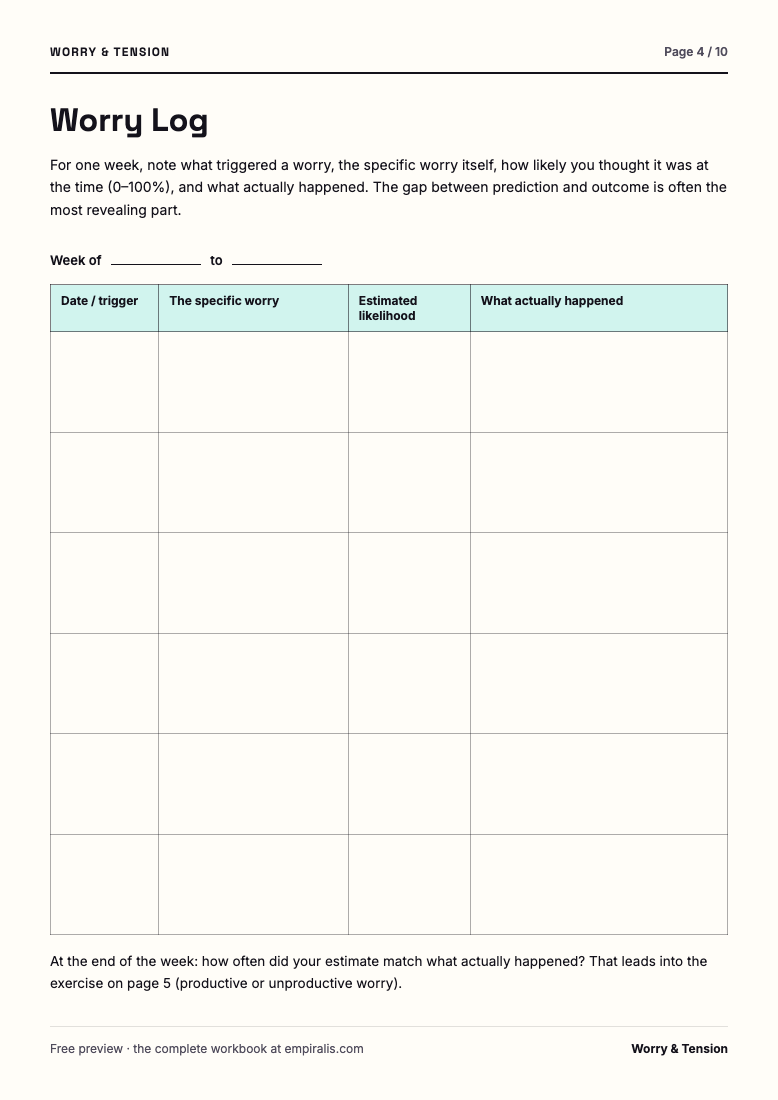
Worry & Tension
Worry & Tension
A calm workbook for the GAD-7: make your worries visible, tell productive worry from unproductive worry, set a fixed worry time, calm the body, and reduce avoidance -- over four weeks.
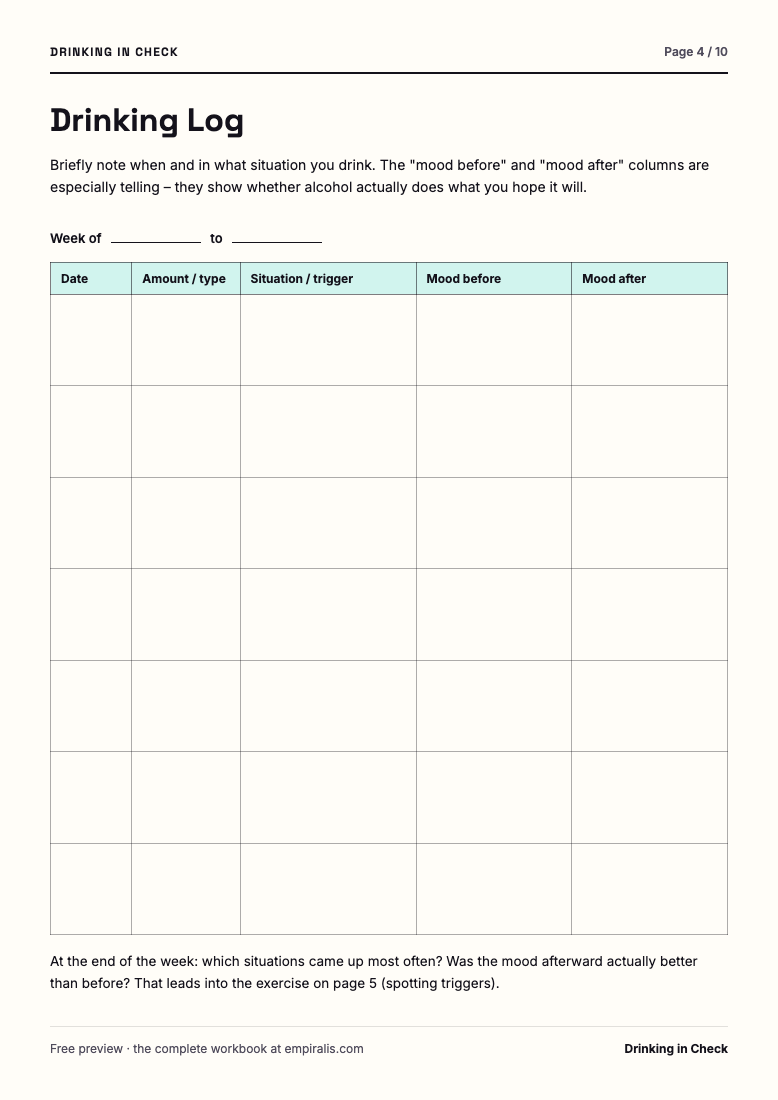
Drinking in Check
Drinking in Check
A workbook for the AUDIT: log your drinking honestly for a week, spot your triggers, plan drink-free days on purpose, and find alternatives for social situations -- over four weeks.
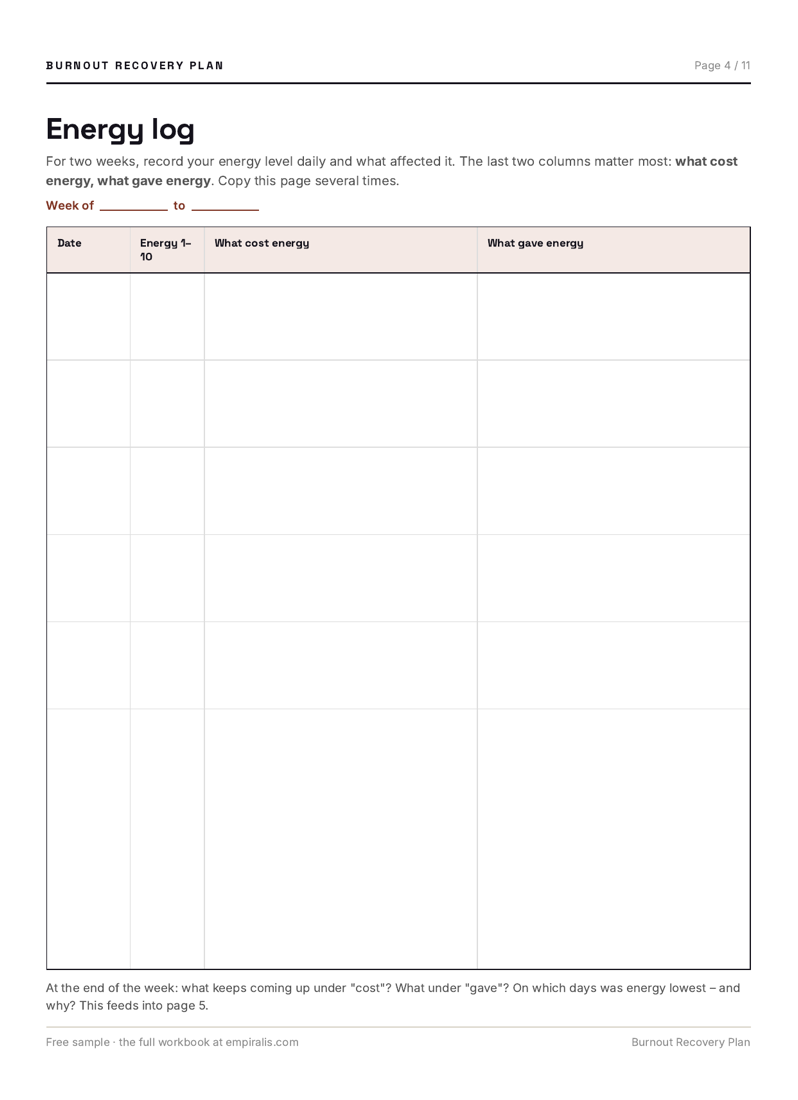
Burnout Recovery Plan
Burnout Recovery Plan
A workbook: burnout is more than a hard day, but not a fixed trait – recognise exhaustion, set boundaries and schedule recovery over four weeks.
Was this useful?
Empiralis stays free and ad-supported. If you'd like to support it directly instead, every bit helps keep it independent.