Media Use & Screen Time: Information, Action Tips & Help
Why how a child uses media says more about their well-being than raw screen time -- and what research shows actually helps.
The Pattern Matters More Than the Time
A key finding from recent research: raw screen time doesn't predict a child's well-being -- the pattern of use does. Things like whether a child uses media secretly, can barely stop, needs it to self-soothe after a bad day, or it's causing conflict at home. A child who plays an hour a day, relaxed, is meaningfully different from one who uses the same hour but shows signs of losing control.
Key point
Raw screen time doesn't predict a child's well-being -- the pattern of use does: secrecy, loss of control, or using media to self-soothe.
The Role of Parents -- Without the Blame
Research shows an understandable cycle: when media is often used to calm or occupy a child, problematic use patterns can become more entrenched -- not because that's wrong, but because the child gets fewer chances to practice self-regulation. Parents' own media use plays a role too: kids take cues from how the adults around them handle their phones. That's not a reason for guilt -- it's a lever that's actually within your control.
Was this useful?
Empiralis stays free and ad-supported. If you'd like to support it directly instead, every bit helps keep it independent.
Worksheet pack for this topic
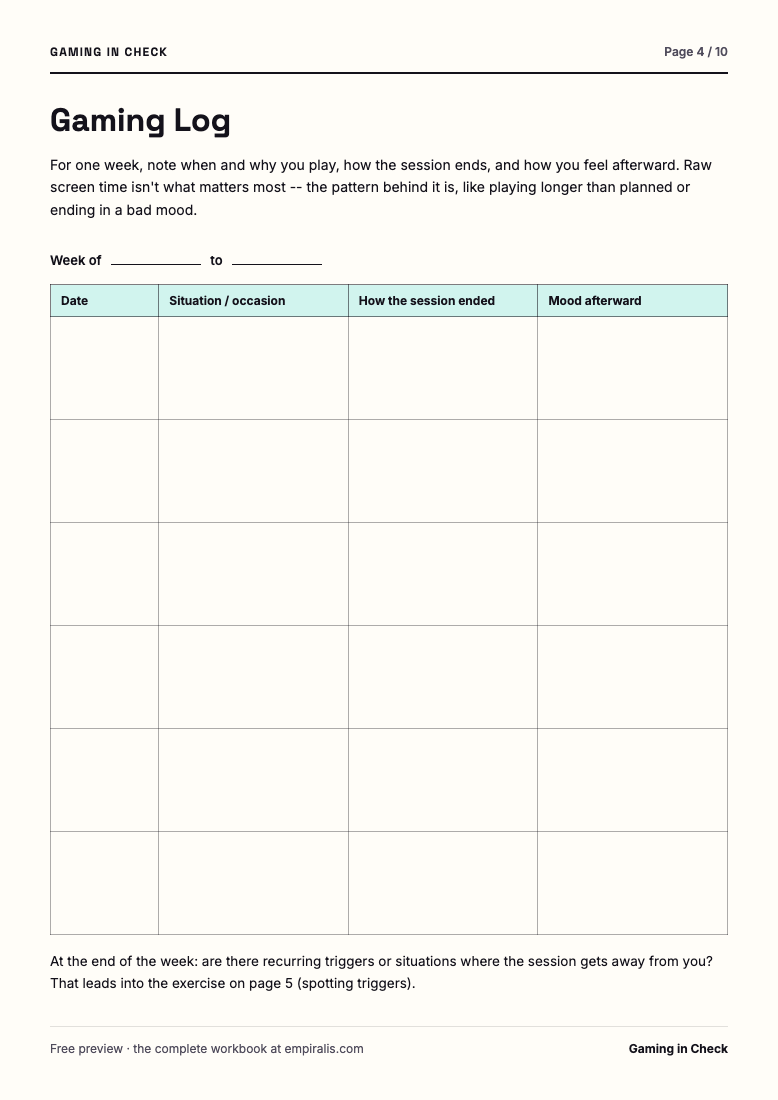
Gaming in Check
Gaming in Check
A workbook for the GAS-7: reflect on your gaming pattern over the last few months, spot your triggers, set up screen-free times on purpose, and prepare a first conversation -- over four weeks.
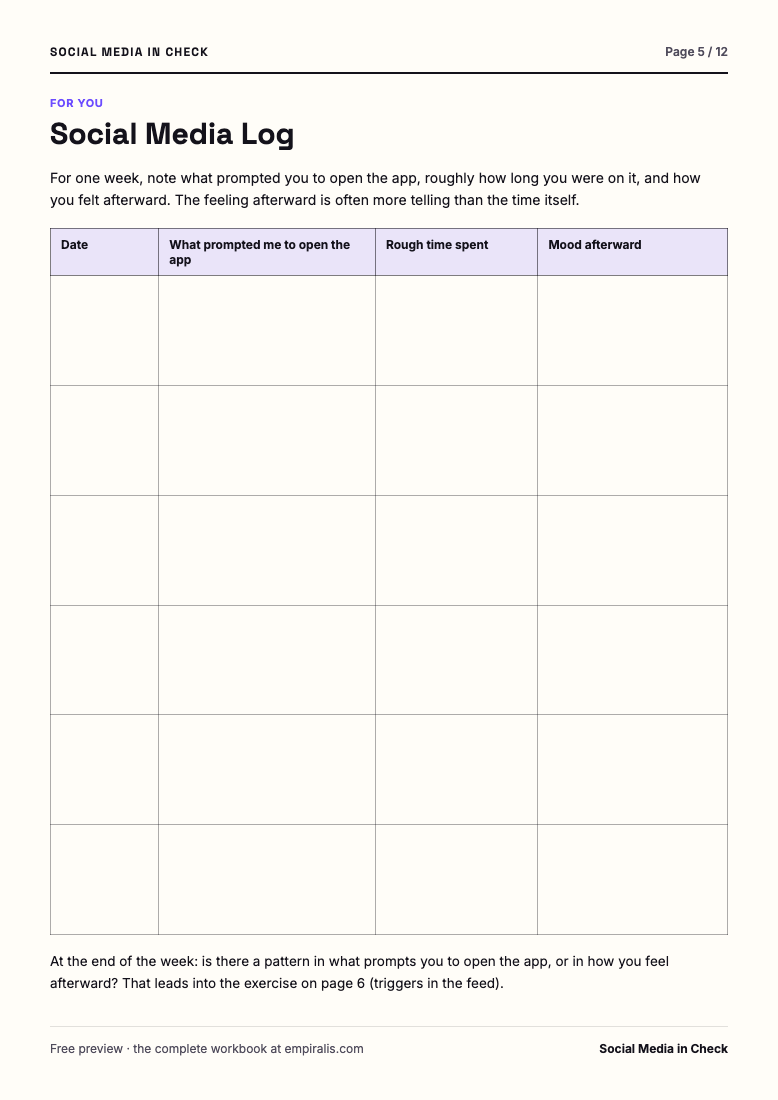
Social Media in Check
Social Media in Check
A workbook for teens and parents: it's not the hours that matter most, but loss of control and real-world consequences -- notice them, take small steps, and find shared rules together.
Related tests
Action tips
- Set clear, consistent media rules together with your child -- research links consistent parental mediation to less problematic use.
- Deliberately use media less often as a "fire extinguisher" for bad moods or boredom -- offer alternatives for self-soothing instead, step by step.
- Reflect on your own media use as a model, especially in moments shared with your child.
- Set screen-free times or places together (e.g. at meals, before bed).
- Watch for signs, not just the clock: secrecy, frustration when stopping, or neglecting other activities say more than raw minutes.
- Show interest in the content, not just control over it -- that opens a conversation more readily than an outright ban.
Checklist: Keeping an Eye on Your Child's Media Use
- Took the GAS-7 and/or SOMEDIS-A and noted the result
- Discussed or reset current media rules together with your child
- Reflected on which situations most often lead to media being used to self-soothe
- Honestly assessed your own media use as a model
- Made an appointment with your child's pediatrician if concerns persist
Media Use Observation Log
Note concrete situations rather than just screen time -- this makes patterns visible and is more helpful in a conversation with a professional than a raw number of minutes.
| Date | Situation/occasion | How the session ended | Mood afterward |
|---|---|---|---|
Help resources
National Parent & Youth Helpline
Free and confidential support, including for questions about media rules.
1-855-427-2736
Your child's pediatrician
A good first stop for persistent concerns about your child's media use.
locally